Who Should Consider GLP Peptides and How to Use Them Properly
What if Proper Diet STILL Isn’t Enough?
I have spent decades helping people improve their metabolic health with food. I believe deeply in the power of a properly formulated ketogenic or carnivore diet, prioritizing protein, removing sugar and processed foods, and changing the way your body uses fuel.
But I also believe something very important:
We should use EVERY tool available to improve our health when we need it. We saw this first hand with Craig’s battle with Lyme Disease. Food alone wasn’t enough. Craig had to use every tool available to get his inflammation back under control. Traditional medicines, tinctures, herbals, HBOT, and many others before he was able to finally find relief.
For many people, changing their diet can dramatically improve hunger, blood sugar, insulin resistance and metabolic health. But there are also people who do everything “right” and still struggle with food noise, overeating and obesity.
For those people, diet alone may not be enough.

When You Know What to Eat, But Your Brain Keeps Telling You to EAT
I have a friend who experienced this firsthand.
She ate keto. She ate carnivore. She understood nutrition and knew what foods she SHOULD be eating. Yet she continued to struggle with overeating, constant food noise and losing the weight she desperately wanted to lose.
It wasn’t a lack of knowledge. She wasn’t sitting around eating donuts and wondering why she couldn’t lose weight! Her brain was constantly telling her to EAT.
That distinction is important. Sometimes we assume that someone struggling with obesity simply needs more discipline. But anyone who has experienced relentless hunger or food noise knows that it can feel like a constant battle.
What finally made a difference for my friend was using a GLP-1–based medication.
For the first time, the constant food noise quieted down. She could eat an appropriate amount of food, stop when she was full, and actually use the nutrition principles she already knew without constantly fighting her appetite.
It became another tool in her metabolic-health toolbox.
GLP-1 Medications Are a Tool—Not a Replacement for Nutrition
I don’t believe GLP-1 medications should replace proper nutrition. I believe they can help some people finally IMPLEMENT proper nutrition.
Medications such as semaglutide and tirzepatide can reduce appetite and increase satiety. Tirzepatide works on both GIP and GLP-1 receptors, which is why you may hear it referred to as a dual agonist.
For someone struggling with significant food noise and overeating despite making major dietary changes, reducing that drive to eat can be incredibly powerful. If you can achieve your goals with nutrition and lifestyle alone, fantastic! But if you have honestly tried and are still struggling with obesity, constant hunger or food noise, I don’t believe you should feel guilty for discussing additional options with your healthcare provider.
Using another tool doesn’t mean your diet “failed.” The goal is to find the tools that help YOU achieve better metabolic health.

Obesity Isn’t Benign
Sometimes we become so focused on the debate over HOW someone loses weight that we forget why losing excess body fat can be so important.
Obesity is associated with an increased risk of numerous health problems, including:
- Insulin resistance
- Type 2 diabetes
- Cardiovascular disease
- Fatty liver disease
- Sleep apnea
- Joint problems
- Reduced mobility
- Other chronic metabolic conditions
This isn’t simply about fitting into smaller jeans.
The goal is better metabolic health, better quality of life and a longer, healthier life.
If nutrition, strength training, sleep and lifestyle changes are getting you there, keep going!
But when those tools aren’t enough, I believe it makes sense to discuss additional options with your healthcare provider rather than spending another decade frustrated and blaming yourself.
Why I Wanted to Tell You About Collective
One of the biggest obstacles preventing people from exploring GLP-1 medications has been COST. That is one of the things that caught my attention about Collective. Collective offers access to compounded GLP-1 medications at pricing that can make this approach much more accessible than many programs.
They currently offer compounded semaglutide for $59 per month and compounded tirzepatide for $69 per month, with the same medication price at any dose. There is also a $199 annual Collective membership after a 21-day free trial.
But I especially like that this isn’t simply a website selling medication.
But what I especially like is that Collective isn’t simply a website selling medication. Their program provides access to physician-personalized care, doctor messaging, nutrition and lifestyle support, and medication through licensed U.S. pharmacies.
That combination is important to me because medication should be only ONE component of a comprehensive approach to improving metabolic health.
LEARN MORE ABOUT COLLECTIVE HERE.
If You’re Taking a GLP-1, Protein Matters MORE—Not Less!
This is the part I really want people to understand. When your appetite drops significantly, you may be eating considerably less food. That makes the nutritional quality of the food you DO eat even more important.
A GLP-1 doesn’t suddenly make protein unimportant. It doesn’t replace resistance training. It doesn’t build muscle for you. It doesn’t replace adequate vitamins, minerals and electrolytes. And it doesn’t teach you the habits you will need for long-term metabolic health.
This is why I would encourage anyone using these medications to make protein a priority. Prioritize protein. Protect your muscle. Strength train. Get your electrolytes. Eat nutrient-dense foods. And use the medication as a tool—not as a replacement for taking care of your body.
Sometimes the right tool can finally give someone enough control over hunger and food noise to put all of those healthy habits into practice.
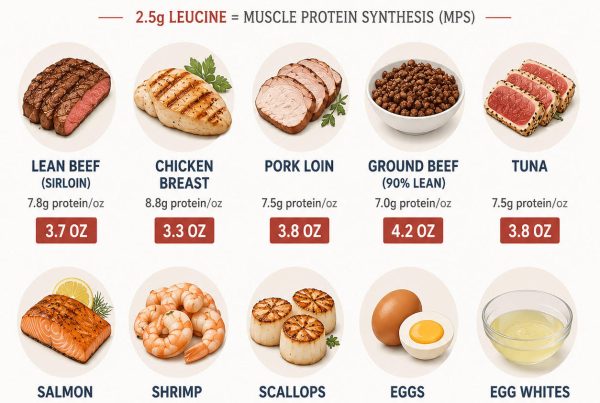
Eat your protein FIRST.
Choose nutrient-dense animal proteins such as beef, eggs, fish, chicken and other quality protein sources. Make sure you’re getting adequate electrolytes and micronutrients. And incorporate resistance training to give your body a reason to maintain metabolically valuable muscle tissue while losing weight.
Your goal shouldn’t simply be to make the number on the scale go down. You want to lose BODY FAT while maintaining as much muscle as possible.
That distinction matters tremendously for your long-term health.
Medication Doesn’t Have to Mean Abandoning Keto or Carnivore
I also don’t think this needs to become an “either/or” argument. You don’t have to choose between nutrition OR medication. For the right person, these approaches can complement each other.
A ketogenic or carnivore diet can provide nutrient-dense protein while dramatically reducing sugar and refined carbohydrates. A GLP-1–based medication may help reduce the food noise and excessive appetite that have made sticking with appropriate portions difficult.
The medication isn’t doing the job of nutrition. It may simply make it easier for someone to consistently follow the nutrition plan that supports their goals.
Use the Tools You Need to Become Metabolically Healthy
I never want someone to believe that needing additional help means they have failed.
Nutrition is an incredibly powerful tool. Strength training is a tool. Sleep is a tool. Stress management is a tool. Hormone optimization when medically appropriate can be a tool.
And for the right person, GLP-1 medications can be another tool.
If you’ve changed your diet, prioritized protein, worked on your lifestyle and still feel like your appetite is fighting you every step of the way, it may be worth having this conversation with a qualified healthcare provider.
The goal isn’t to prove that you can do everything with diet alone.
The goal is to get healthy.
If an additional tool helps someone with obesity lose excess body fat, control food noise, improve their nutrition and move toward better metabolic health, I believe that option deserves to be part of the conversation.
CLICK HERE TO LEARN MORE ABOUT COLLECTIVE AND SEE IF YOU QUALIFY:
Get Details HereGLP-1 medications are prescription medications and aren’t appropriate for everyone. Treatment decisions should be made with a qualified healthcare professional who can evaluate your individual health history, medications, risks and goals.